
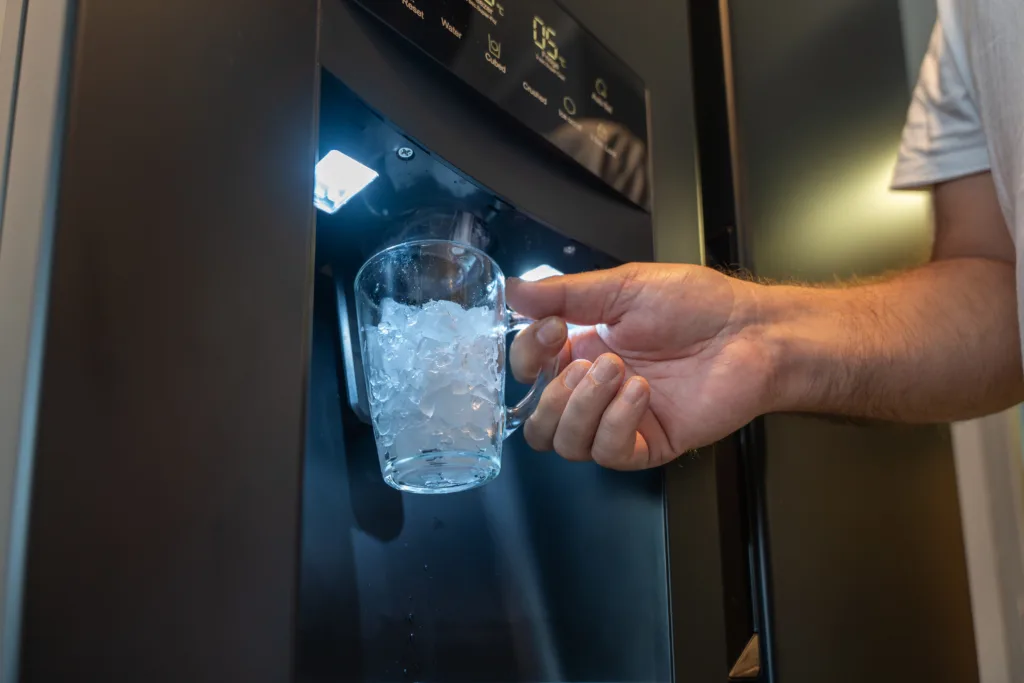
Ice makers are a convenient addition to any modern kitchen — in fact, many freezers have built-in ice-making capabilities, saving you the hassle of filling up trays and waiting for the water to freeze. Instead, you have a steady supply of ice whenever you want it.
When your ice maker suddenly stops working, it can be a real headache — especially during hot weather, parties, or family gatherings. While some causes are simple, others require professional diagnosis and repair.
If your ice maker has suddenly stopped working, keep reading to learn the next steps to take and when you should call the appliance repair professionals at Appliance E.M.T.
How an Ice Maker Works
Let’s go over how an ice maker actually works so you understand how to troubleshoot.
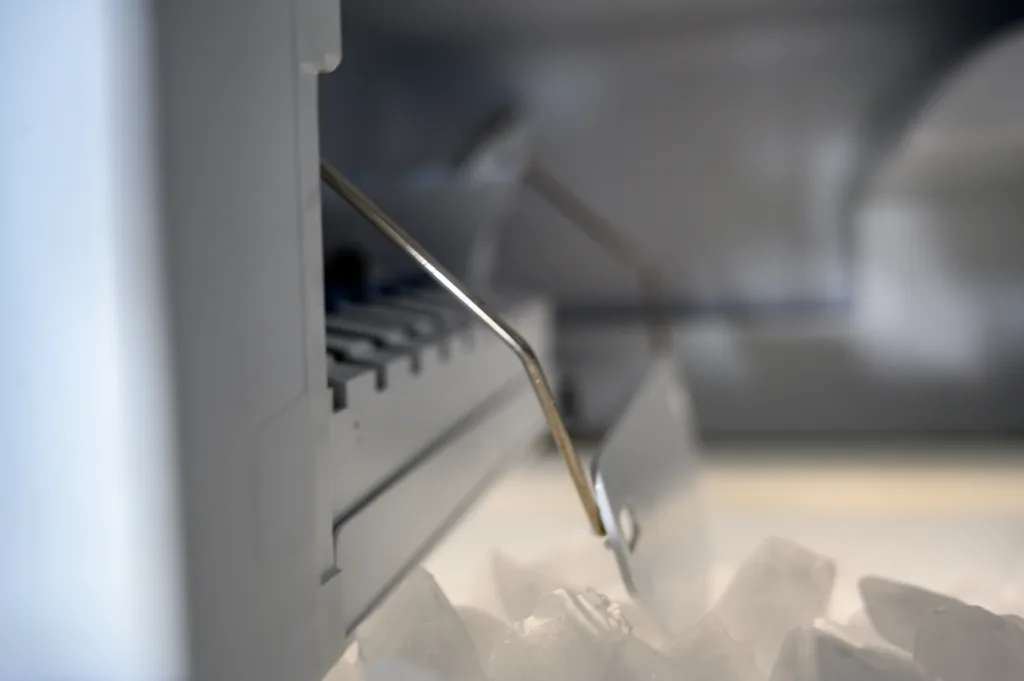
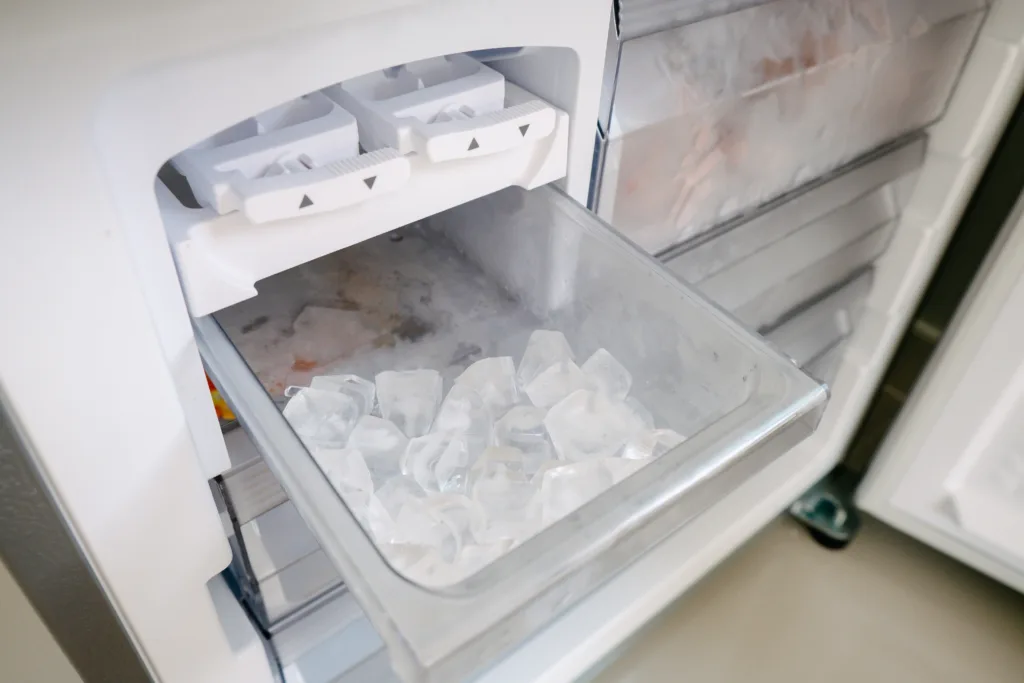
First, water enters the ice maker through a supply line. The water then freezes inside the mold. Once it’s completely frozen, the heating element kicks in to loosen the cubes from the mold. Finally, the ejector arm pushes the finished ice cubes into the storage bin. Then the cycle repeats automatically, ensuring you have a supply of ice ready to go at all times.
A problem anywhere in this process can stop ice production, which is why it’s important to keep each component in proper working order.
Make Sure the Ice Maker Is Turned On
The first step in troubleshooting your ice maker is making sure it’s turned on. Many appliances have an off/off switch or metal shutoff arm that can be accidentally triggered when cleaning or retrieving ice. Some refrigerators/freezers have digital controls that may have somehow been disabled. Take a second to verify the settings — check the display panel, make sure vacation mode or ice-off mode aren’t enabled, and any switches haven’t accidentally been flipped.
Check the Freezer Temperature
The ice-making process requires the proper temperature — typically between 0°F and 5°F. Warmer temperatures prevent the water from freezing properly. If your freezer is too warm for ice formation, it could be because the door was left open, the condenser coils are dirty, the thermostat is faulty, the evaporator fan is failing, or there are issues with the compressor.
Inspect the Water Supply
Next, inspect the water supply. Make sure the water supply valve behind the refrigerator/freezer is fully open. If the line is kinked or damaged, the water flow is reduced, limiting ice production. Additionally, if your home has insufficient water pressure in general, it can prevent the ice molds from filling properly.
Look for frozen fill tubes as well. If the small fill tube supplying water to the ice maker is frozen, no water reaches the mold, which means no new ice forms. This can occur due to a faulty inlet valve allowing for slow drips or extremely cold freezer settings.
Replace the Water Filter
Dirty water filters reduce water flow to both the dispenser and ice maker. As minerals build up over time, it affects their performance. It’s important to replace the water filter according to the manufacturer’s recommendations (typically every six months).
Check for Jammed Ice Cubes
Misshapen or partially melted ice cubes can become lodged inside the ejector mechanism, blocking ice from coming out. Additionally, when ice is piled too high in the bin, it can interfere with sensors or shutoff arms, and clumped ice won’t be able to be dispensed. Check for jams and large clumps of ice and clear them if necessary.
Malfunctioning Ice Maker Assembly
Ice makers include many components that can potentially fail, including the motor, mold heater, thermostat, control module, and ejector gears. The assembly may be malfunctioning if the appliance cycles inconsistently, ice production stops completely, ice partially forms but never ejects, or the system makes unusual clicking or grinding noises.
When to Call the Experts at Appliance E.M.T.
DIY appliance repairs and troubleshooting can be difficult, and without the right tools and training, you risk accidentally making the problem worse. Plus, some repairs — like those that deal with electrical components — are dangerous to complete on your own and are best handled by professionals.
If you’ve tried everything you can and still haven’t gotten your ice maker working properly, it’s time to call Appliance E.M.T. Our prompt, professional repairs can restore reliable ice production, prevent further damage and malfunctions, and extend the appliance’s lifespan. Contact us today to schedule your service appointment!
Follow Us